The History of Acupuncture Meridians in Bellingham Acupuncture

July 5th, 2010 No comments »

In Bellingham acupuncture treatment, there are actually 12 main acupuncture meridians and they go along the arms and legs. These standard meridians are the lungs, stomach, large intestine, heart, spleen, small intestine, kidney, pericardium, urinary bladder, triple warmer, liver and gall bladder. The meridians are divided into two groups which are the yin and yang.

History of the Meridians

Five thousand years ago, ancient Chinese discovered energy in the body that can’t be felt, found or seen with the senses. Any disturbances in these forms of energy could manifest abnormal patterns of cellular growth and organization. Along with this energy that travels inside the human body, the Chinese also discovered and named twelve acupuncture meridians. Acupuncture meridians can be compared to copper traces on an electric circuit board foe they run throughout the body. Each acupuncture meridian was named by the life function connected with them. Majority of Western scientists believed that acupuncture meridians are like imaginary structures since there are no published records or anatomical studies of the meridians in conventional medical journals to validate their existence. This is the reason why western scientists believe that only nerve pathways comprise the true means of acupuncture therapy. Acupuncture meridians are the pathways of the negative and positive energy power that carries the communication of various parts of the human body.

In fact, meridians connect everything in the body like the tissues, organs, teeth, etc. The meridians are believed to pass an invisible energy known as Ch’i. This energy enters the body through specific acupuncture points and they would flow to deep organ structures thus bringing nourishment to all parts of the body. To distinguish acupuncture points from the surrounding skin, they have exceptional electrical characteristics. It is along the meridians that these acupuncture points exist. In character, these points are electro-magnetic and they consist of small palpable spots which can be located by the hand, muscle testing and micro-electrical voltage meters usually when they are not functioning properly.

To optimize human performance, the 500 acupuncture points were mapped and used for centuries and these points are the connection between the negative and positive meridians and functions of the body including the muscles and internal organs. These points are useful both in treating and diagnosing disease states.

The Ch’i that is known to be magnetically subtle is not electrical in nature but they are able to produce secondary electrical fields. This allows changes at the physical cellular level through the initiation of secondary electrical fields. These electrical fields are translated into DC-current interactions from the higher energy meridians into the physical body. They affect the primary bio-electronic processes that maintain and provide unity with the physical-cellular structure. For example, when the flow of energy to a specific organ is disrupted, patterns of cellular disturbance occur. By feeling the pulses, imbalances in the meridians can be detected.

Brief Information on Bellingham Acupuncture

June 14th, 2010 No comments »

Acupuncture in Bellingham is the practice in traditional Chinese method of promoting the body’s natural healing process and encouraging the body to improve functioning. This technique is done by inserting needles and applying electrical or heat stimulation at specific acupuncture points.

How Acupuncture Works

According to classical Chinese explanation, there are channels of energy that run in regular patterns through the body and over its surface. These channels are known as meridians and they are like rivers flowing inside the body to nourish and cleanse tissues. Any obstruction in the movement of these energy pathways is like a dam that backs up in others.

By needling the acupuncture points, the meridians can be influenced since acupuncture basically unblocks the obstruction at the dams and restore the regular flow of the energy through the meridians. In other words, acupuncture can therefore help the body’s internal organs to fix the imbalances in absorption, digestion and energy production activities. Aside from that, it improves the circulation of the energy of the meridians.

Modern science explains that needling involved in acupuncture stimulates the nervous system to release the chemicals in the brain, muscles and spinal cord. These released chemicals will then either change the experience of pain or they can trigger the release of other chemicals and hormones that influence the internal regulating system of the body.

Stimulating the body’s natural healing abilities and promoting the emotional and physical well-being of an individual will result to an improved energy and biochemical balance produced by acupuncture.

The Difference of Medical Acupuncture

Acupuncture is considered to be a very old medical art and there are many approaches to practicing and learning it. The term used to describe acupuncture performed by a trained doctor or licensed in Western doctor who underwent acupuncture training as a specialty practice is called medical acupuncture. to treat an illness, such a doctor can use one or the other approach or a combination of both.

The Scope of Medical Acupuncture

Medical acupuncture is a medical system that influences three areas of health care specifically the promotion of well-being and health, prevention off illness and treatment of a variety of medical conditions. A lot may think that acupuncture is associated with pain management but in the hands of well-trained acupuncturists, it can give off much broader applications. As the only treatment, acupuncture can be effective and it can also be used as a support or in conjunction to other medical treatments even if it a medical or surgical disorder. The World Health Organization recognized that acupuncture can be used in treating a wide range of medical problems. For digestive disorders, it can treat gastritis and hyperactivity, constipation, spastic colon and diarrhea. For respiratory disorders would include disorders such as sinusitis, bronchitis, sore throat, asthma and recurrent chest infections. Neurological problems would include headaches, neck pain, facial tics, frozen shoulder, rib neuritis, tennis elbow, and various forms of tendinitis, sciatica, low back pain and osteoarthritis. Lastly would be problems of the reproductive, urinary and menstrual systems.

Attitude and Health

February 16th, 2010 No comments »

Hello Folks,

Today’s blog is for practitioner and patient alike. We are going to discuss the effects of a positive attitude on health and treatment outcomes.

For many of us going to get medical help is a chore. Something we do when all else has failed. We try to beat the game and the house always wins. We can make ourselves feel better and say historically we are a trauma based medical system and if it isn’t broke don’t fix it. Well is this working? If you believe in healthiest nations indicators it’s time to take another look at our system. We were ranked, last year, in the high 80’s far as the World Health Organization is concerned. We started out at 3.  Now seriously, is what we are doing working? However, the model itself is not the topic of this blog, but rather those within the model. Us.

If you think the model can be improved upon, please keep reading. If not, I assume you are already surfing. So lets go. . .

The Women’s Health Initiative, with over 100,000 women in the study, shows clearly that optimists suffer a full 30 percent less heart disease and an incredible 14% decrease in deaths from any cause. Not bad huh. While its delightful to be the pessimist it may a self-fulfilling prophecy.  The mayo clinic did a similar study. A full 30% difference in health outcomes between the two groups.  The Gallup Agency has done countless studies as well. Employees who focus on strengths did far better than those trying to shore up weaknesses. Now look folks you can drag me to 500 meetings to learn how to by a sycophant and at the end of that tenure of shame I am still going to voice my opinion and fight for what I believe to be right and true. You can’t take the key elements out of a person. So save your money. Focus on your strength and take a look, to quote the Pogues, on the sunny side of the street. 

Most positive/optimistic people I have come into contact have a couple of things in common. So if you are a patient or practitioner keep an eye out on this it will save you time. The first thing they believe in is themselves. They believe their body has the capacity to heal. The second thing they believe in is the modality of medicine we are practicing.  They believe what we have to offer can make them a lot better. These are our patients. We love them because they are already on board. There is no begging to come back, haggling over progress, etc. Our patients are here and as long as we are improving their health they stay. All day I long I move from room to room and ask the same questions. How are you? Better. Good! It’s easy. So now, as a patient if you are dragging through the day and are not happy with your type of care, get some help you believe in. You don’t have to be a convert, just believe in the ability to change. If you are a practitoner slogging through the day at your clinic it’s probably because either you or your patients don’t believe in the quality of care being delivered. So get to it. Optimists out!

Immunity, Conclusion of Top 5

December 22nd, 2009 No comments »

Well happy holidays to one and to all. This is our last installment of our top 5 ways to boost immunity. Coincidentally they have a lot in common this time of year:  stress and spend time with loved ones.

Stress has many deleterious effects on the human body. A New England Journal of Medicine article studied the effects of stress on the immune system.  People who were under greater stress were 3x more likely to develop a cold after direct exposure to the rhinovirus – and they say good jobs are hard to find! It makes sense when you think about it, most of us get sick after a stressful event. During the stress I think the adrenal system can shore up any weaknesses. As the stressor leaves, we are more susceptible to opportunistic infections. 

Spend time with loved ones. I know it’s almost like a national anthem, oh I do poorly over the holidays or oh god we’re meeting as a family. Eeegads. Well get off of the misery train, you don’t have to ride it if you don’t want. Enjoy the people around you for what they are.  If you have differences with them you can rest assure they have them with you. So relax.  Be merry.  And get over it. Happy holidays and see you all in 2010.

Immunity and Exercise

December 11th, 2009 No comments »

Exercise, the kryptonite of all couch potatoes, is a valued ally in the quest for health. Why?  Because exercise increases the flow of blood through the body. If the circulation of blood is increased then the body has a more readily available supply of what it needs.  Which means you will be able to do what you need to, when you need to do it.

The Cleveland Clinic has done a study on this very fact. Here’s what they found.  Even relatively low levels of aerobic exercise can protect your immune system.

Yes, even in collective blog land I can her the sigh. So if you are sitting there thinking, I can’t do 1 hour a day. Get over it. Anyone can do this program.  So lets get at it.

Just 20-30 minutes of brisk walking 5 days per week turns out to be the  ideal training program for maintaining a healthy immune response.

So close down the home entertainment system, the internet and, yes, the cell phone and get out there.  Now.

Immunity and Sleep

December 11th, 2009 No comments »

OK, so lets tackle sleep first. 

A study in the Archives of Internal Medicine,  shows that poor sleep and the susceptibility to colds go hand in hand.  Marvel concept, huh. The study followed 153 men and women for two weeks and kept track of both the duration and quality of sleep. They then exposed all of the participants to the rhinovirus, or the common cold. Who are these people? And they say there are a lack of good jobs. The results:  Those who slept on average less than 7 hours a night were 3 times more likely to get sick compared to those who averaged at least 8 hours. The verdict? When you are tired, SLEEP.

A few years ago one of my teachers said. I had a humbling weekend. Why? I will tell you. I verified that my dog is smarter than I am. As I sat there feeling tired from a rough night I saw my dog curl up in the corner. He sleeps when he’s tired. I hope to learn to do the same someday. If you can’t sleep, come in here and lets see if we can help. Do we have a deal?

Top 5 ways to Improve Immunity

December 4th, 2009 No comments »

Hello All,

While we scramble for cover under a constant barrage of viral and opportunistic infections it might be good to do a chapter review. What can we do to boost our immune system? Well here it goes, the top 5 things you can do at home: 

1) Get enough sleep

2) Eat the right food, see prior blog

3) Exercise

4) Reduce Stress

5) Spend time with loved ones.


Stay tuned for more detailed information on each of these 5 tactics to boost immunity.

Recipes for Immunity

November 10th, 2009 1 comment »

As cold and flu season heads our way it’s time to think about what type of protection do we need. For me, it’s going to start with food. Real food. Not food from boxes or cans or cryogenically sealed vacuum bags. 

According to the NeiJing SuWen, one of the oldest medical books in world history, health care starts with food, first. Only after a disease progresses do we administer herbs and acupuncture – the original preventative medicine.

OK, so what to do now, you say?  I looked up best immune boosting foods on the Internet and came up with Vitamin C,  Vitamin D and a few others.

Since when have vitamins become food? Give me a break already.

Yep, I was at my favorite restaurant over the weekend and you wouldn’t believe the cut of Vit. D I had. Oh man it was braised, with chanterelle mushrooms and paired with liquid calcium and magnesium. Unbelievable! 

While there are great profit margins in supplements I would rather look first to mother nature and the great foods she offers.

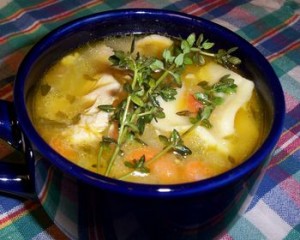
Let’s start with a take  chicken soup. I’ve added minor changes to the old-time favorite, but not many. Also the ingredients are commonly found in your local store or co op.

Bon appetit and remember the infamous battle cry of Micael Pollan: Eat food. Not too much. Mostly plants.


Super Shitake Mushroom Soup

Serves 4
Ingredients

1 onion, chopped
1/2 lb. shitakes, sliced with stems removed
2 cloves garlic, minced
2-3 Tbl olive oil
6 chicken thighs, chopped & skinned
12 cups chicken stock

4oz. dried mushrooms
1 Tbl. fish sauce
2 Tbl. fresh oregano

Directions

  1. Place sliced shitake caps in a stock pot. Cook for a few minutes, until the shitakes wilt.
  2. Add olive oil, onion & garlic and saute until onions are translucent, usually about 10 minutes at medium heat, stirring often
  3. Add chicken thighs and cook for 4-6 minutes
  4. Add chicken stock, dried mushrooms and water and simmer for 15 minutes. 
  5. OK I can hear it already out there. Who makes chicken stock these days? If you don’t you should. I you won’t then take three boxes of organic stock and add to the recipe, for a total of 12 cups. Sorry Michael. 
  6. Add fish sauce and fresh oregano and serve hotshitake chicken soup

An acupuncture health center blog

October 27th, 2009 No comments »

It’s an interesting question when you think about it. To blog or not to blog? In an age where everyone and their uncle is publishing online what could we possibly add to that mess?

Well for starters, we have some great stories and unbelievably effective treatments, thanks to my teachers.  This blog is a dedication to the spirit of genius that fuels Chinese medicine as well as a tribute to our patients, without whom this would be utterly pointless.

In the coming weeks please check back with us as we will be regularly updating this site. I would like to make this blog relevant to patients and practitoners.  I will be covering issues that we see in the clinic every day.  Please feel free to comment and let us know what else you would like to hear about.

Before I sign off on today’s blog I would like to talk  a little about our methods here. I am recognized as a senior student of  Dr. Jimmy Chang, one of Taiwan’s most famous pulse and herb doctors.  We use Dr. Tan’s Balance Method but taken it in a different direction. We follow Deke Kendall’s vascular distribution charts and have dropped the erroneous meridian system. Our clinical model is based on the work of my mentor, Bob Doane, L.Ac.

As an ice breaker for all of you out there, please check out a short article I wrote entitled Demystifying Chinese Medicine.